
The Behemoth is an “Indie” Video game development company that was created and founded in 2002, John Baez, Lead Artist Dan Paladin (More commonly known as his former username “Synj”) and Tom Fulp (The creator of the popular community flash based website Newgrounds).
Behemoth have a development studio despite the team’s small size of just 14 members located in San Diego, California. The style of games they produce stick to the classic and simplistic roots of gaming.
Their first console game, Alien Hominid, started off as an incredibly popular Flash game found on the internet. The game had a attractive look that made it look like a moving stylised illustration/cartoon. The characters and style that Dan Paladin used to portray the characters were attractive and easily likeable. Accompanied with impressive, humorous and smooth animation, I believe these two facts were the main attraction and focal point of the game.
 In 2004, Alien Hominid was reformatted, rebuilt and released onto the mainstream gaming industry as a title for the current generation consoles. It featured many extra options like new modes, cooperative play and an extended story with more levels. The game was considered a success and stood out from the other games in it’s genre. It was later released in HD for the Xbox 360 Arcade.
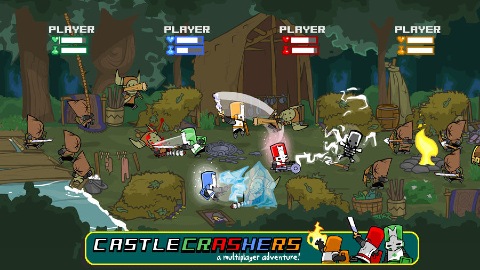
 It would be another 4 years until another release from Behemoth, and in 2008, it was in the form of Castle Crashers. Again done Dan Paladin’s signature 2D style but implementing a much more impressive array of animation and gameplay, yet keeping to it’s retro-esque roots. The game was only released on Xbox Live Arcade but went on to become of the most downloaded games in the history of Xbox Live receiving praising reviews with over 1,000,000 players logged on their leaderboards.
Another title, BattleBlock Theater is currently in development as keeping to the Developers unique trait, it’s sticking with Paladin’s art style.
Also showing video documentaries interviewing the employees as they discuss the game in works.
Whilst The Behemoth maybe release one trailer or two of the game, have a small blog releasing bits of information written by maybe the lead designer, etc. Whilst little to none advertising to support its release. And when a game is delivered in that way to the public I believe that when it then start to receive rave reviews, it shows that it really deserves it in a sence of that there has been no hype leading on the image of that the advertiser were trying to achieve.
Below is a very impressively portrayed Timeline showing the history of The Behmoth illustrated by Dan Paladin.

References:
http://www.thebehemoth.com/
http://en.wikipedia.org/wiki/The_Behemoth
http://www.thebehemoth.com/faq.html


