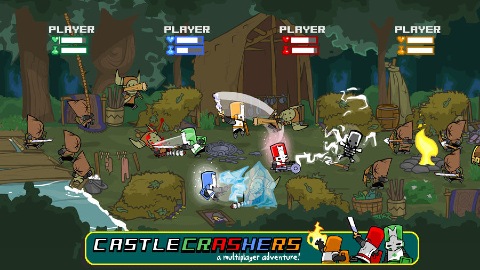
In the earlier years of Video Games, environments were considered to be just a backdrop to keep the story going, Either being simplistic or standard plains before being edged up to using more complex and in-depth ideas for the areas that surrounded the player as the progressed.
Now in the current generations of games, environments are regarded as a crucial element to immersion for the player allowing them to delve themselves deeper into the space, making the player become involved with what is happening around them, So that they feel that they are making progress or development through the story and making a difference.
As technology has developed, so have the opportunities and capabilities, delivering a much more immersive use of space. From having open areas in which players could freely explore the game world, usually consisting of a massive space in which they can traverse or being confined to a smaller area but keeping the experience to a more compact scale but making the story and atmosphere amplify the effect of the immersion to the player.
Now in the current generations of games, environments are regarded as a crucial element to immersion for the player allowing them to delve themselves deeper into the space, making the player become involved with what is happening around them, So that they feel that they are making progress or development through the story and making a difference.
As technology has developed, so have the opportunities and capabilities, delivering a much more immersive use of space. From having open areas in which players could freely explore the game world, usually consisting of a massive space in which they can traverse or being confined to a smaller area but keeping the experience to a more compact scale but making the story and atmosphere amplify the effect of the immersion to the player.
The gaming industry is developing and increasing the quality in environments that can be created. Either through quality, beauty, function or even mass of space. Epic Game’s Unreal engine is forever upgrading and improving, making more believable and improved locales.
It could be from the increased depth to the damage that can be caused the surrounding assets of the environment around the player, making them believe that everything in the game has aesthetics can be affected rather than being pre-rendered objects that cannot be altered, ruining the immersive effect.
It could be from the increased depth to the damage that can be caused the surrounding assets of the environment around the player, making them believe that everything in the game has aesthetics can be affected rather than being pre-rendered objects that cannot be altered, ruining the immersive effect.
A crucial aspect of developing a strong and unique environment is by the use of space. “The unlimited or incalculably great three-dimensional realm or expanse in which all material object are located and all events occur.” The meaning as described in the dictionary for the noun tense of the word, greatly explaining the definition of how the word can be applied to this subject.
Like on how a developer can alter the use of space to alter to mood that the story that is trying to be told. If they game is going to trying to display a massive, climactic event on a grand scale everything would be on a blown out environment, but for a more personal, stealthy or tense experience the space will be very compact and pressed in to give off a claustrophobic experience, this tactic is usually used for Horror games.
Like on how a developer can alter the use of space to alter to mood that the story that is trying to be told. If they game is going to trying to display a massive, climactic event on a grand scale everything would be on a blown out environment, but for a more personal, stealthy or tense experience the space will be very compact and pressed in to give off a claustrophobic experience, this tactic is usually used for Horror games.
Also representation is key for displaying the intentions of how the environment should immerse the player have themselves feel a part of the world they inhabit.
I plan to explore and show through the years of the games industry the intentions and purposes for environments and how they have changed, Also the standards and guidelines that are considered for a strong environment.
I plan to explore and show through the years of the games industry the intentions and purposes for environments and how they have changed, Also the standards and guidelines that are considered for a strong environment.
In the early years of the first core video games, they consisted of being contained entirely to an interface, meaning that no sense of atmosphere or space was present in games like Pong which just comprised of solid shapes on a flat plain. Games like Tetris may have pushed the bar further by designing the surrounding interface more in depth giving the a lot more character.
It wasn’t until the late 1970’s and 80’s that video games started to bring a greater sense of atmosphere and presence. One of which being an arcade game called Steroids, Developed and released by Atari Inc. it is considered one of the most popular and influential games of the “Golden Age of Arcade Games”. Despite being a vector game it was still capable of delivering a space environment as well as the assets of the asteroids and the alien ships.
The same can be considered with Space Invaders being the Raster display alternate.
The same can be considered with Space Invaders being the Raster display alternate.
The next true development for environments was during the home entertainment era, the side-scrolling genre was taken by storm and started a whole new array of creative scenarios and brilliant artistry to capture the attention of the player and involve them into the space around them. The most popular and strongest example of this is the Nintendo classic Super Mario Bros. For the Nintendo entertainment System (NES), released in 1985; it was the best selling video game of all time with 40 million copies sold and being largely responsible for the NES’s success.
Creating a full-colour world with a back-drop, fore ground objects and textured floors, it was one of the more immersive experiences that could be had at the time. It represented its colourful character through its bright colours and of course, it’s unforgettable Theme Song.
Moving forward again with the Home Entertainment era, another Nintendo published game pushed itself into the higher stages of the capabilities of what could be expected in environment design.
With StarFox, Even though a majority of the assets and objects of what comprised in this game were flat, assets and objects, they occupied a full 3D space in which included your AI team mates.
The scenery and themes changed as you visited different planets and traversed the sections of space, all which featuring a different environment that suited the game’s play style
The scenery and themes changed as you visited different planets and traversed the sections of space, all which featuring a different environment that suited the game’s play style
Another game that had proven itself for developing and showing a new of travelling game worlds was Pokemon’s Red and Blue versions. Released on 1996 and developed by Game Freak for Nintendo’s hand-held system Game Boy.
It featured an entire game world for the player to explore and travel. From Cities to Caves and Forests, each with their own denoted attributes, like different encounters and various cosmetic changes. Even though that due to restraints of a game being on a portable cartridge it used it’s space well in having large areas which be regarded as “Safe Zones” in-between challenges.
The main premise for having an open world is that the player can travel to where they want or need to go and there is no set path to follow.
It featured an entire game world for the player to explore and travel. From Cities to Caves and Forests, each with their own denoted attributes, like different encounters and various cosmetic changes. Even though that due to restraints of a game being on a portable cartridge it used it’s space well in having large areas which be regarded as “Safe Zones” in-between challenges.
The main premise for having an open world is that the player can travel to where they want or need to go and there is no set path to follow.
A similar playing style was used in the Final Fantasy series, giving the player a huge and vast space. Each game in the series held a large number of “hubs” which were usually utilised as places for characters to develop the story as they connected with a massive “overworld” which are usually full of random encounters.
In today’s generation of Video Games, a lot of Action/Adventure genre games the story follows a set path so it means that the player is restrained to a set path, not really allowing freedom to roam and explore.
But this doesn’t mean that the environments are compacted or small. Even though the playable space may be contained the background or surrounding environment is usually to be huge and expansive.
In today’s generation of Video Games, a lot of Action/Adventure genre games the story follows a set path so it means that the player is restrained to a set path, not really allowing freedom to roam and explore.
But this doesn’t mean that the environments are compacted or small. Even though the playable space may be contained the background or surrounding environment is usually to be huge and expansive.
In the recent release of Halo Reach for the Xbox 360, the story makes the character follow this style by making them keep to a pre-routed path, completing the objectives as they reach the end.
But usually surrounding these areas are expansive, large and spread out environments. Giving the illusions that the space is represented large than it actually is.
The 2008 Xbox release Gears of War 2 developed by Epic games used a similar method, but to fill some of their massive spaces they created a form of warming AI that caused them be pour into areas having the properties and values of a fully rendered character.
All of this is happening in the background in large numbers all of them being interactive with the player.
But usually surrounding these areas are expansive, large and spread out environments. Giving the illusions that the space is represented large than it actually is.
The 2008 Xbox release Gears of War 2 developed by Epic games used a similar method, but to fill some of their massive spaces they created a form of warming AI that caused them be pour into areas having the properties and values of a fully rendered character.
All of this is happening in the background in large numbers all of them being interactive with the player.
With these new developments and capabilities that are now available to the industry. Developers are able to play with the ideas more freely and experiment with styles.
For example in the 2009 release “The Saboteur” by the now closed Pandemic Studios, utilized an interesting aspect in which when the player had gotten their way through the story the game will shift from it’s original black and white colour hue (Fitting as the game was set during World War II) and certain elements will start to fade into colour,
giving the idea of the environment not being a digitally created world.
Another game that created a unique usage of space Splinter Cell: Conviction. Throughout the game all of the objectives and messages are presented on to the walls in the game’s environment.
Not being visible to the characters in the game world of course, but it made it appear that he words had been projected onto the walls as the walls as the text wrapped around any object in it’s space. This idea really gives the game’s story a cinematic feel, having the form of being appealing to the viewer aswell as having the function of being informative and helpful.
For example in the 2009 release “The Saboteur” by the now closed Pandemic Studios, utilized an interesting aspect in which when the player had gotten their way through the story the game will shift from it’s original black and white colour hue (Fitting as the game was set during World War II) and certain elements will start to fade into colour,
giving the idea of the environment not being a digitally created world.
Another game that created a unique usage of space Splinter Cell: Conviction. Throughout the game all of the objectives and messages are presented on to the walls in the game’s environment.
Not being visible to the characters in the game world of course, but it made it appear that he words had been projected onto the walls as the walls as the text wrapped around any object in it’s space. This idea really gives the game’s story a cinematic feel, having the form of being appealing to the viewer aswell as having the function of being informative and helpful.
Creating environments in games has becoming a lot more complex over the generations, having various standards and aspects that should be followed or kept in mind when developing environments.
The following aspects are taken from a presentation by Bungie at IDGA Montreal for Halo 3 with Vic Deleon and Mike Zac, who are Bungie’s Senior and Lead Environment Artists.
These are what they believe are the main aspects that an environment must accomplish. Beauty and Function are the two main elements of what should be kept in balance; they must be appealing but remain possible to navigate and compatible with gameplay.
The following aspects are taken from a presentation by Bungie at IDGA Montreal for Halo 3 with Vic Deleon and Mike Zac, who are Bungie’s Senior and Lead Environment Artists.
These are what they believe are the main aspects that an environment must accomplish. Beauty and Function are the two main elements of what should be kept in balance; they must be appealing but remain possible to navigate and compatible with gameplay.
The first aspect to be considered is something they call “The Hook”, a strong layout that makes a space unique, visual and structural. This can be achieved by lighting, AI and Architecture.
This part of the environment needs to be easily remembered so they can reflect their experiences onto others without being too complex.
Another crucial aspect to them is the sense of scale, “Informed idea on how large the spaces needs to be” either through capacity, engagement range or even things being larger than life.
Along with these is the specific aspect of Combat Elements (Judging by the genre of the game). Three core elements comprise through the games consisting of Safe Fronts, where the player enters the space is able to observe the environment, recharge themselves or plan ahead for the coming challenges that are known to be ahead. Safe fronts are usually utilised for when there is a big challenge on the way for it be able to give the player a fighting chance.
“Killing Zones” in which it denotes the space in which most action takes place, visually filled with cover or differing terrain and even large open areas.
There are plenty of variations to what could be converted into a space where action could take place; even at times an unwieldy location can be used on purpose to give the player an uncomfortable or inconvenient location to add to the difficulty to the situation. So this aspect can be applied in a vast variety of ways.
The last aspect being “Enemy Zones” in which the “Head Quarters” of challenge can be found, It’s usually where the player’s enemies spawn from and focuses as the main objective to complete. These aspects are often merged into the environment or make it known to the player either by audio or dialogue. For example for Gears of War 2, enemies spawn from a crack in the floor that emerges before bursting to let loose a swarm of enemies that will come forth at the player. The emergence of the enemies is a loud and large sequence so it is hard for the player to miss. Along with the other characters usually shouting out dialogue; warning the player and audio stinger in the soundtrack.
This part of the environment needs to be easily remembered so they can reflect their experiences onto others without being too complex.
Another crucial aspect to them is the sense of scale, “Informed idea on how large the spaces needs to be” either through capacity, engagement range or even things being larger than life.
Along with these is the specific aspect of Combat Elements (Judging by the genre of the game). Three core elements comprise through the games consisting of Safe Fronts, where the player enters the space is able to observe the environment, recharge themselves or plan ahead for the coming challenges that are known to be ahead. Safe fronts are usually utilised for when there is a big challenge on the way for it be able to give the player a fighting chance.
“Killing Zones” in which it denotes the space in which most action takes place, visually filled with cover or differing terrain and even large open areas.
There are plenty of variations to what could be converted into a space where action could take place; even at times an unwieldy location can be used on purpose to give the player an uncomfortable or inconvenient location to add to the difficulty to the situation. So this aspect can be applied in a vast variety of ways.
The last aspect being “Enemy Zones” in which the “Head Quarters” of challenge can be found, It’s usually where the player’s enemies spawn from and focuses as the main objective to complete. These aspects are often merged into the environment or make it known to the player either by audio or dialogue. For example for Gears of War 2, enemies spawn from a crack in the floor that emerges before bursting to let loose a swarm of enemies that will come forth at the player. The emergence of the enemies is a loud and large sequence so it is hard for the player to miss. Along with the other characters usually shouting out dialogue; warning the player and audio stinger in the soundtrack.
I personally believe that the points proven here by Vic and Mike from Bungie are true in being important and crucial elements to having an immersive environment.
After discovering these aspects I decided to compare them to recent releases to which they could apply. It was proven that comparing these elements to today’s generation of game environments, you realise that the aspects have to very carefully implemented and known to be used at the right time and knowing when and why. Not just for cosmetic value or for gameplay purposes, or rather; Beauty and Function.
Seeing how games had started off with just being confined to just interfaces with solid flat plains, before being pushed further into spaces and environments that not only assist in telling the story that the game is trying to portray, but also immerse the player to want to keep exploring through to see more and more to what the game has to offer on locations and experiences.
If one certain part of the experience had delivered a real moment for the player to remember they will want to continue through to the finish to see if they keep trying to top they considered their favourite, becoming immersed into the game world as they explore and observe their surrounding environments.
Considering the possibilities of what can accomplished with today’s technology for environments the areas and locations that had been developed for previous systems are equally impressive to some extent. Most likely the pixel era in the late 80’s, the environments created with such limited resources are really impressive. Classic arcade games had truly stunning artwork in their sprites showcasing the skill in animation or design, some cases generating a 3D effect without even coming out of the second dimension.
Some Indy developers even try their best to revert back to old styles and gameplay of the old “retro” style of games such as side-scrollers and beat-‘em-ups but giving them their own modernised twist. These years the standards of gaming environments have been pushed phenomenally. Creating massive chasms holding colossal scaled battles to realistic and bustling cities filled with the inhabitants. It really begs to ask what will be possible in the future of the rapidly developing possibilities of Game Environments.
After discovering these aspects I decided to compare them to recent releases to which they could apply. It was proven that comparing these elements to today’s generation of game environments, you realise that the aspects have to very carefully implemented and known to be used at the right time and knowing when and why. Not just for cosmetic value or for gameplay purposes, or rather; Beauty and Function.
Seeing how games had started off with just being confined to just interfaces with solid flat plains, before being pushed further into spaces and environments that not only assist in telling the story that the game is trying to portray, but also immerse the player to want to keep exploring through to see more and more to what the game has to offer on locations and experiences.
If one certain part of the experience had delivered a real moment for the player to remember they will want to continue through to the finish to see if they keep trying to top they considered their favourite, becoming immersed into the game world as they explore and observe their surrounding environments.
Considering the possibilities of what can accomplished with today’s technology for environments the areas and locations that had been developed for previous systems are equally impressive to some extent. Most likely the pixel era in the late 80’s, the environments created with such limited resources are really impressive. Classic arcade games had truly stunning artwork in their sprites showcasing the skill in animation or design, some cases generating a 3D effect without even coming out of the second dimension.
Some Indy developers even try their best to revert back to old styles and gameplay of the old “retro” style of games such as side-scrollers and beat-‘em-ups but giving them their own modernised twist. These years the standards of gaming environments have been pushed phenomenally. Creating massive chasms holding colossal scaled battles to realistic and bustling cities filled with the inhabitants. It really begs to ask what will be possible in the future of the rapidly developing possibilities of Game Environments.
Bibliography/References:
http://www.unrealengine.com/features/terrain/
http://www.unrealengine.com/features/terrain/